
Compiled By McKinlee Rainey/Executive Theme Editor and Chloe Dunlap/Theme Editor
What is a Shutdown?
By Lucas Levens
Staff Writer
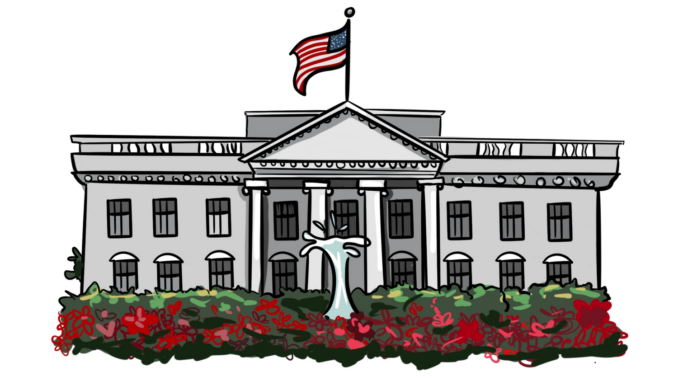
The United States government ended a 43 day shutdown Wednesday night after Congress failed to agree on a new budget. This means many federal agencies were closed or ran with limited staff, leaving thousands of workers without pay. Services including national parks, research labs, and food assistance programs were disrupted. Legislators debated with no clear end in sight.
Government shutdowns occur when lawmakers can’t agree on how to fund federal programs. Without that funding, parts of the government stop operating until a compromise is reached. These standoffs often stem from disagreements between major political parties over spending priorities or specific policies.
According to Costa history teacher Daniel Russell, shutdowns often become more about politics than problem solving. “Political parties tend to use government shutdowns as opportunities to connect aspects of the opposing party’s ideology to the misfortune caused by the actual shutdown,” he explained. In other words, politicians sometimes use these moments to make the other side look bad instead of focusing on helping citizens.
Effects vary for everyday Americans: This includes government employees missing paychecks and delays in important programs that millions depend on. Repeated shutdowns also damage public trust. People can start feeling ignored when leaders use essential services as bargaining chips.
“They cause the public to doubt the efficiency of government and feel alienated,” said Russell.
As the shutdown has recently ended, all government operations will be restored. Federal workers will be paid and various services including public works, international safety, military, law enforcement, and economic services will be set back to normal. While the main issue is resolved, some obscurities may lay beneath the surface, such as the government budget and political discord. Since the shutdown recently ended the effects on future government issues will soon be uncovered.
Effects: Federal Workers
By Madison Young
Executive Sports Editor
When a government shutdown occurs, some people’s immediate thoughts are on the impact of politicians and people in high office. But really, it affects so many more people than that.
The term federal worker covers a wide and diverse group of people. From the President and Vice President to park rangers and mail carriers, many had to work without pay until the shutdown ended. This means facing the heavy burden of not knowing when the next pay check will arrive or if being able to provide food is possible.
“Not getting paid is terrible,” said Spanish teacher Nancy Geczi. “They are being used as pawns in a political game and it just isn’t right.”
The situation creates a chain reaction of cause and effect. Beyond federal employees, the public also feels the consequences. Extreme delays and flight cancellations happen all around the U.S. Many depend on tourism as a driving force for their businesses, and with fewer travelers coming and going, small businesses are losing the income necessary to survive and therefore job losses are increasing as well.
“I believe that there are many problems a government shutdown can cause for regular people,” said junior Allyn Hilt. “Many people don’t realize just how much control the government has on our daily lives.”
For students, a shutdown of the government can feel distant and not relevant to their lives in any way. But in truth, shutdowns affect everyone in some way. Families who rely on federal jobs or benefits may have to cut back, and public programs like research grants or community projects can be delayed.
“People our age should definitely care about problems like this,” senior Sage Meidroth. “Especially as big of an issue as this, everyone is affected in some way.”
Overall, a government shutdown shows just how much of everyday life depends on the government’s logistics. It’s not always about politics, it’s about the paychecks due to so many workers.
Economic Consequences
By McKinlee Rainey
Executive Theme Editor
The recent government shutdown can lead to more economic problems than just missed paychecks for federal workers: It can impact the entire economy.
When the government stops all activity, money stops flowing and business becomes delayed. Even a small government shutdown can cause problems that last far longer than just the duration of the shutdown.
A shutdown of the government causes economic growth to slow, with experts saying that the economy might grow 0.1 to 0.2 per cent less each week the shutdown lasts. The Congressional Budget Office estimates that the 2025 shutdown could reduce overall economic growth by 1 to 2 per cent. It is estimated that during the shutdown the government lost between 7 and 14 million dollars.
“The shutdown also weighs on GDP growth via reduced government activity. Over the financial markets, a prolonged shutdown could have ramifications for inflation linked products, including TIPS,” said J.P. Morgan global research project.
Even schools were affected by this shutdown, with delays for programs such as Head Start and Impact Aid, which are federally funded programs that support children and local school districts. Federal research grants may have been impacted and Department of Education staff member funding could slow.
“The longer typical government shutdowns last the more it impacts jobs, workers, and maybe even our schools, considering that the shutdown can make impacts larger than just those directly involved, reaching families, businesses and schools everywhere,” said Costa junior Natalia Winterson.
Effects on the country as a whole are bigger than some may think and more economic or personal consequences could appear.
“At the end of the day, a shutdown isn’t about politics, but the people,” said junior Savine Nguyen. “It shows just how connected we all really are.”
Leave a Reply